Autisim
Autism spectrum disorder (ASD) is a neurodevelopmental disorder generally characterized by difficulty interacting and communicating with other people, repetitive behaviors, and restricted interests. Symptom severity varies greatly across those with ASD, and not all individuals will show every symptom(1).
While the exact causes of ASD remain unclear, there is strong evidence that ASD involves decreased blood flow to certain brain regions, neuroinflammation, oxidative stress, and mitochondrial dysfunction(2). Our therapies are proven to target these exact issues and may help effectively improve symptoms of ASD.
Extivita Therapies for Autism
Hyperbaric Oxygen Therapy

Neurofeedback

Nutritional IV Therapy

Supplements
Hyperbaric Oxygen Therapy for Autism
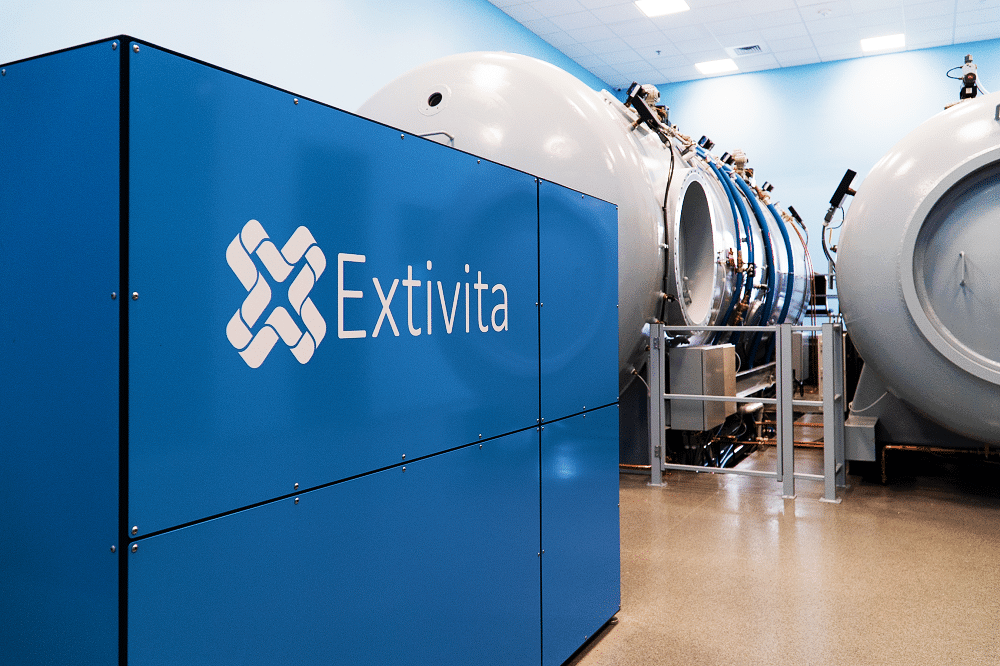
We recommend hyperbaric oxygen therapy (HBOT) for ASD due to its benefits for the immune system and blood flow(3-4). There have been several studies on the effects of HBOT for ASD, with many pointing to significant symptom improvement following HBOT(5-7).
One study found that HBOT significantly decreased markers of inflammation and resulted in improved motivation, speech, and cognitive awareness in children with ASD(5).
A more recent study also found that children with ASD improved in almost all categories of both the Autism Treatment Evaluation Checklist (ATEC) and Childhood Autism Rating Scale (CARS) following 40 sessions of HBOT(7). Although further research is necessary, preliminary evidence points to HBOT as an extremely low-risk, effective therapy for those with ASD.
Effects of HBOT on Autisim:

New Blood Vessel Formation
Increased Stem Cell Activity

Decreased Inflammation
Neurofeedback for Autism
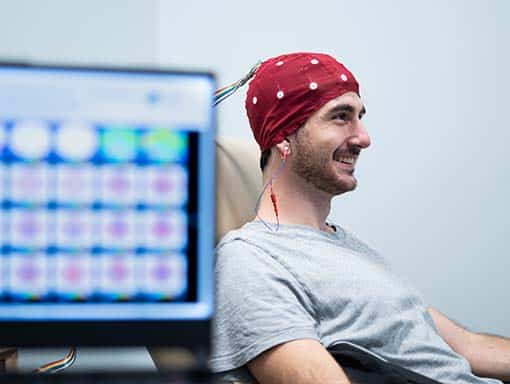
We recommend neurofeedback therapy due to the abundance of evidence supporting its efficacy for those with ASD(8). Neurofeedback likely improves ASD symptoms by helping balance the abnormal brain wave activity that is consistently observed in those with ASD(9-11).
Neurofeedback protocols for ASD typically involve decreasing theta activity (4-7Hz) while increasing either low beta activity (12-15Hz) or mu activity (8-13Hz)(12-15). Most studies complete 40 neurofeedback sessions and have found improvements in executive functioning, verbal and nonverbal communication, sociability, repetitive behaviors, imitation, sustained attention, and more(12-15). Lastly, a recent study found that these improvements were still present 12 months after ending neurofeedback therapy(15).
IV Therapy for Autism:
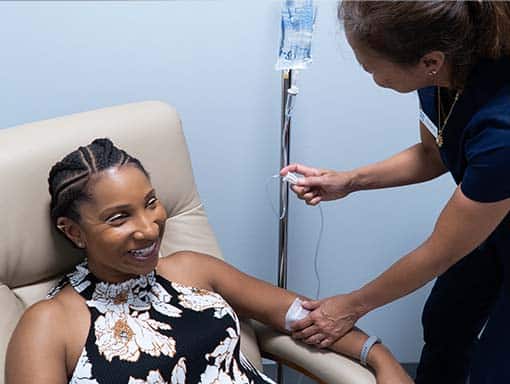
We recommend our Myer’s Cocktail IV and glutathione IV for those with ASD. There is robust evidence that oxidative stress is significantly elevated in ASD(16-17). Both the Myer’s Cocktail and glutathione are powerful antioxidant IVs that effectively reduce oxidative stress and its subsequent cellular damage(18-19). Additionally, low glutathione levels have repeatedly been found in those with ASD, suggesting the need for additional sources such as glutathione infusions(16). Overall, our Myer’s Cocktail and glutathione IVs are ideal for reducing cellular dysfunction in those with ASD.
News & Research for Autism:
Hyperbaric oxygen treatment in autism spectrum disorders.
Abstract: Traditionally, hyperbaric oxygen treatment (HBOT) is indicated in several clinical disorders include decompression sickness, healing of problem wounds and arterial gas embolism. However, some investigators have used HBOT to treat individuals with autism...
Hyperbaric oxygen in the treatment of childhood autism: a randomised controlled trial.
Abstract: Promising results with hyperbaric therapy for children with autism have been reported, but most involved the use of only mild pressure with oxygen supplementation. To date, there has been no randomised, blinded trial of 100% oxygen administered at hyperbaric...
Proton magnetic resonance spectroscopy and MRI reveal no evidence for brain mitochondrial dysfunction in children with autism spectrum disorder
Abstract: Brain mitochondrial dysfunction has been proposed as an etiologic factor in autism spectrum disorder (ASD). Proton magnetic resonance spectroscopic imaging ((1)HMRS) and MRI were used to assess for evidence of brain mitochondrial dysfunction in...
References
- NIMH » Autism Spectrum Disorder. https://www.nimh.nih.gov/health/topics/autism-spectrum-disorders-asd/index.shtml. Accessed 25 Mar. 2021.
- Rossignol, Daniel A., and Richard E. Frye. “Evidence Linking Oxidative Stress, Mitochondrial Dysfunction, and Inflammation in the Brain of Individuals with Autism.” Frontiers in Physiology, vol. 5, Frontiers, 2014. Frontiers, doi:10.3389/fphys.2014.00150.
- Rossignol, Daniel A., et al. “Hyperbaric Oxygen Treatment in Autism Spectrum Disorders.” Medical Gas Research, vol. 2, no. 1, June 2012, p. 16. PubMed, doi:10.1186/2045-9912-2-16.
- Rossignol, Daniel A., et al. “The Effects of Hyperbaric Oxygen Therapy on Oxidative Stress, Inflammation, and Symptoms in Children with Autism: An Open-Label Pilot Study.” BMC Pediatrics, vol. 7, Nov. 2007, p. 36. PubMed, doi:10.1186/1471-2431-7-36.
- A, Kostiukow, and Samborski W. “The Effectiveness of Hyperbaric Oxygen Therapy (HBOT) in Children with Autism Spectrum Disorders.” Polski Merkuriusz Lekarski : Organ Polskiego Towarzystwa Lekarskiego, vol. 48, no. 283, Feb. 2020, pp. 15–18.
- Wang, Jun, et al. “Resting State EEG Abnormalities in Autism Spectrum Disorders.” Journal of Neurodevelopmental Disorders, vol. 5, no. 1, Sept. 2013, p. 24. Springer Link, doi:10.1186/1866-1955-5-24.
- Stroganova, Tatiana A., et al. “Abnormal EEG Lateralization in Boys with Autism.” Clinical Neurophysiology, vol. 118, no. 8, Aug. 2007, pp. 1842–54. ScienceDirect, doi:10.1016/j.clinph.2007.05.005.
- Burnette, Courtney P., et al. “Anterior EEG Asymmetry and the Modifier Model of Autism.” Journal of Autism and Developmental Disorders, vol. 41, no. 8, Aug. 2011, pp. 1113–24. DOI.org (Crossref), doi:10.1007/s10803-010-1138-0.
- van Hoogdalem, Lothar E., et al. “The Effectiveness of Neurofeedback Therapy as an Alternative Treatment for Autism Spectrum Disorders in Children: A Systematic Review.” Journal of Psychophysiology, Hogrefe Publishing, 2020, p. No Pagination Specified-No Pagination Specified. APA PsycNET, doi:10.1027/0269-8803/a000265.
- Kouijzer, Mirjam E. J., et al. “Neurofeedback Treatment in Autism. Preliminary Findings in Behavioral, Cognitive, and Neurophysiological Functioning.” Research in Autism Spectrum Disorders, vol. 4, no. 3, July 2010, pp. 386–99. ScienceDirect, doi:10.1016/j.rasd.2009.10.007.
- Kouijzer, Mirjam E. J., et al. “Neurofeedback Improves Executive Functioning in Children with Autism Spectrum Disorders.” Research in Autism Spectrum Disorders, vol. 3, no. 1, Jan. 2009, pp. 145–62. ScienceDirect, doi:10.1016/j.rasd.2008.05.001.
- Pineda, J. A., et al. “Positive Behavioral and Electrophysiological Changes Following Neurofeedback Training in Children with Autism.” Research in Autism Spectrum Disorders, vol. 2, no. 3, July 2008, pp. 557–81. ScienceDirect, doi:10.1016/j.rasd.2007.12.003.
- Datko, Michael, et al. “Positive Effects of Neurofeedback on Autism Symptoms Correlate with Brain Activation during Imitation and Observation.” European Journal of Neuroscience, vol. 47, no. 6, 2018, pp. 579–91. Wiley Online Library, doi:https://doi.org/10.1111/ejn.13551.
- Kouijzer, Mirjam E. J., et al. “Long-Term Effects of Neurofeedback Treatment in Autism.” Research in Autism Spectrum Disorders, vol. 3, no. 2, Apr. 2009, pp. 496–501. ScienceDirect, doi:10.1016/j.rasd.2008.10.003.
- Adams, James B., et al. “Nutritional and Metabolic Status of Children with Autism vs. Neurotypical Children, and the Association with Autism Severity.” Nutrition & Metabolism, vol. 8, no. 1, June 2011, p. 34. PubMed, doi:10.1186/1743-7075-8-34.
- Essa, M. M., et al. “Excitotoxicity in the Pathogenesis of Autism.” Neurotoxicity Research, vol. 23, no. 4, May 2013, pp. 393–400. PubMed, doi:10.1007/s12640-012-9354-3.
- Carr, Anitra C., and Silvia Maggini. “Vitamin C and Immune Function.” Nutrients, vol. 9, no. 11, Nov. 2017. PubMed Central, doi:10.3390/nu9111211.
- Forman, Henry Jay, et al. “Glutathione: Overview of Its Protective Roles, Measurement, and Biosynthesis.” Molecular Aspects of Medicine, vol. 30, no. 1–2, Apr. 2009, pp. 1–12. PubMed, doi:10.1016/j.mam.2008.08.006.