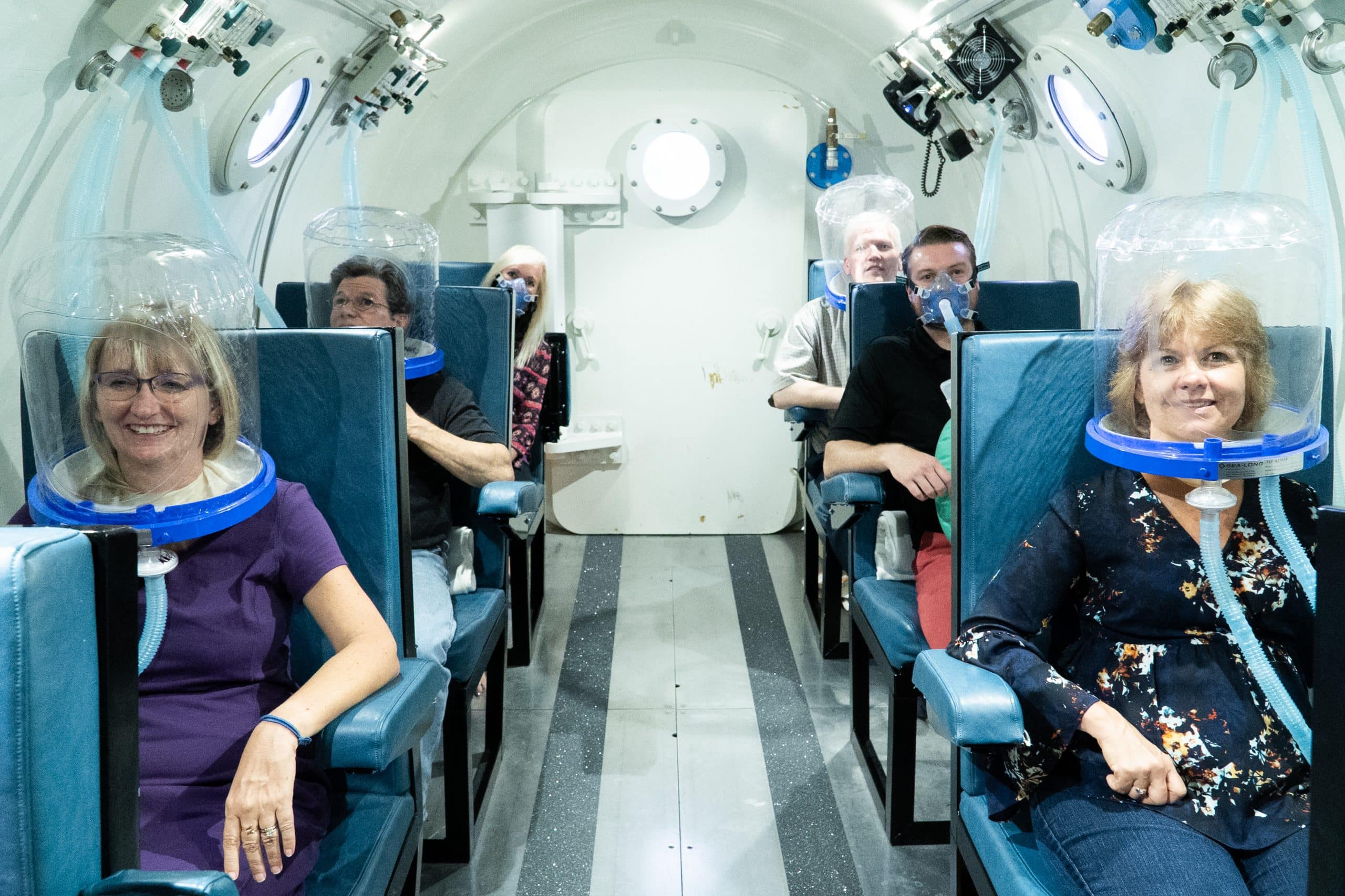
HBOT Research

  1. Home
  2. HBOT Research

Explore our database on Hyperbaric Oxygen Therapy (HBOT) Research below.

Extivita maintains an extensive research & publication database for various diseases and therapies such as Hyperbaric Oxygen Therapy, Neurofeedback, Nutritional IV Therapy, Infrared Sauna, and Pulsed Electromagnetic Field Therapy.

For a complete list of indications treated at Extivita, explore the conditions we treat.


Hyperbaric oxygen for treatment of problem wounds.

Abstract: Hyperbaric oxygen treatment has seen a resurgence of interest in recent years, with more academic medical centers building facilities and more physicians becoming board-certified in undersea and hyperbaric medicine.The reason for the growing interest is...

read more

The delayed cost of treatment.

Abstract: A 78-year-old woman presented with acute decreased vision in both eyes. She had been treated for a pituitary mass with a total of 4,500 centigray of external beam radiation 8 months prior to presentation. She was diagnosed with radiation optic neuropathy....

read more

Crohn’s disease and hyperbaric oxygen therapy.

Abstract: Evaluate the application of Hyperbaric Oxygen Therapy (HBO) in patients with Crohn's disease (CD) refractory to pharmacologic therapy, who developed abdominal, anorectal or skin complications. Fourteen selected patients with refractory CD and treated at the...

read more

A phase I study of low-pressure hyperbaric oxygen therapy for blast-induced post-concussion syndrome and post-traumatic stress disorder.

This is a preliminary report on the safety and efficacy of 1.5 ATA hyperbaric oxygen therapy (HBOT) in military subjects with chronic blast-induced mild to moderate traumatic brain injury (TBI)/post-concussion syndrome (PCS) and post-traumatic stress disorder (PTSD). Sixteen military subjects received 40 1.5 ATA/60 min HBOT sessions in 30 days. Symptoms, physical and neurological exams, SPECT brain imaging, and neuropsychological and psychological testing were completed before and within 1 week after treatment. Subjects experienced reversible middle ear barotrauma (5), transient deterioration in symptoms (4), and reversible bronchospasm (1);

read more