Generalized Anxiety Disorder
Generalized anxiety disorder (GAD) is characterized by excessive, uncontrollable anxiety and worry about things such as finances, health, professional life, etc.(1). Additionally, symptoms such as fatigue, irritability, and insomnia are all characteristics of GAD. Like other anxiety disorders, the combination of mental and physiological distress in GAD often leads to issues with work and social life and results in an increased risk of depression, substance-abuse, and other health problems(1).
Treatment for GAD typically involves psychotherapy, medication, or a combination of the two, though a larger percentage of people tend to choose psychotherapy(1-3). We highly recommend neurofeedback for those with GAD who don’t respond well to conventional treatment and anyone looking for an alternative therapy with long-term benefits. Both Hyperbaric Oxygen Therapy and IV Therapy may serve as supportive therapies for GAD due to their anti-inflammatory and antioxidant effects.
Extivita Therapies for Generalized Anxiety Disorder
Hyperbaric Oxygen Therapy

Neurofeedback

IV Therapy
Supplements
Hyperbaric Oxygen Therapy for Anxiety
Hyperbaric oxygen therapy (HBOT) may help relieve symptoms of generalized anxiety disorder (GAD) due to its anti-inflammatory effects(8-10). Evidence suggests that people with GAD have elevated levels of pro-inflammatory markers as well as low levels of anti-inflammatory markers(11-12). Additionally, the degree of inflammation is correlated with the severity of GAD symptoms(12).
Neurofeedback Therapy for Anxiety
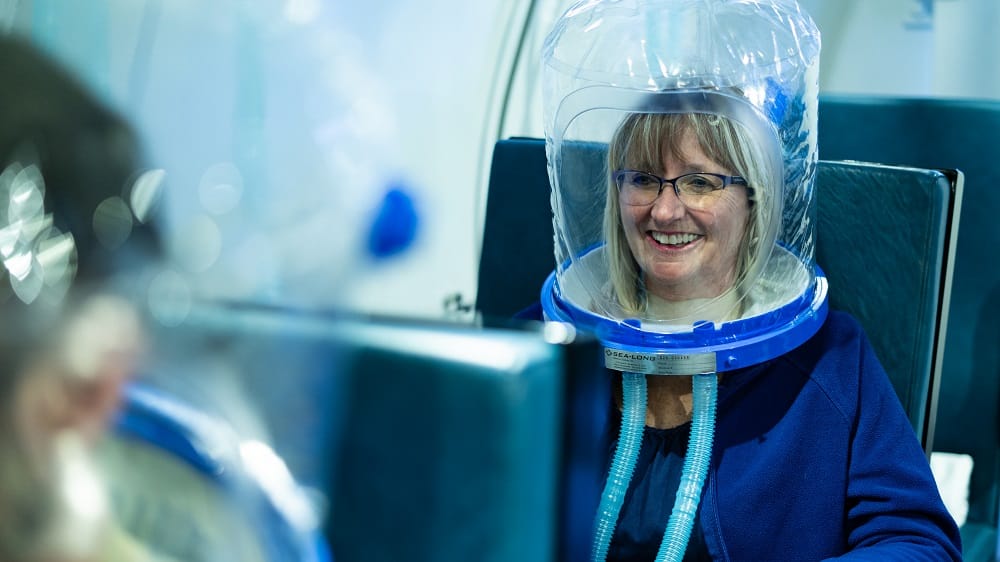
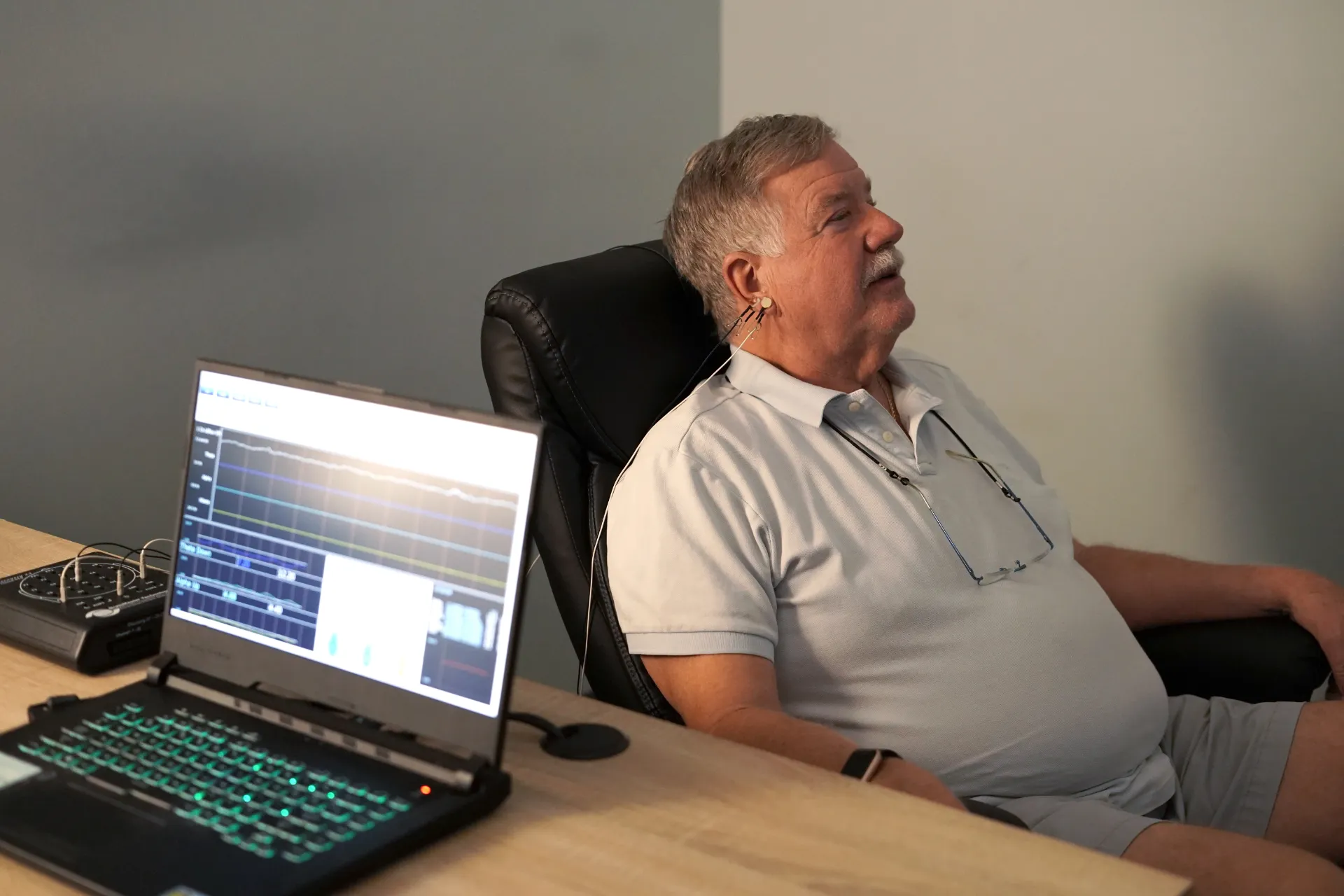
Neurofeedback protocols for GAD typically reduce levels of hyperactivation by either 1) increasing slow wave (alpha and theta) activity or 2) decreasing excess fast wave (beta and high beta) activity. By increasing alpha activity, people with GAD may feel more relaxed and levels of cortisol (which increases stress) may decrease as well(4-5). Some protocols that increase both alpha and theta activity towards the back of head have shown to significantly reduce GAD, one to the point where patients no longer fit the diagnosis for GAD(6-7).
In some cases, people with GAD may also present with elevated beta activity which can contribute to anxiety and related symptoms. The specific protocol for someone with GAD depends on a careful analysis of that individuals qEEG brain map, their behavioral assessment, and their neurofeedback consultation.
IV Therapy for Anxiety
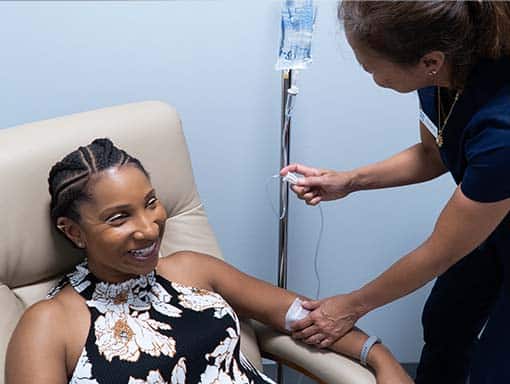
We recommend the Myer’s Cocktail IV and Glutathione IV for generalized anxiety disorder (GAD). The Myer’s Cocktail IV contains Vitamin C, a powerful antioxidant that has been shown to relieve anxiety symptoms by reducing the oxidative stress characteristic of GAD(13-14). It also contains Vitamin B complex and Magnesium, both of which have demonstrated anxiety-reducing effects(15-18). Glutathione is considered the “master antioxidant” and may alleviate GAD symptoms by decreasing oxidative stress and the cellular damage which it causes(19-20).
References
- Generalized Anxiety Disorder | NEJM. https://www.nejm.org/doi/full/10.1056/nejmcp1502514?casa_token=ua2BJzNxQFcAAAAA:lDCgJMKDpKvsVjHlyhiyot_pruwQdbYEZbjRN6GWD4vYgQxOPuVftwaaM_kwfGp6S8bZW9jQEF81FQ. Accessed 10 Feb. 2021.
- Cuijpers, Pim, et al. “Psychological Treatment of Generalized Anxiety Disorder: A Meta-Analysis.” Clinical Psychology Review, vol. 34, no. 2, Mar. 2014, pp. 130–40. ScienceDirect, doi:10.1016/j.cpr.2014.01.002.
- Reinhold, Jennifer A., and Karl Rickels. “Pharmacological Treatment for Generalized Anxiety Disorder in Adults: An Update.” Expert Opinion on Pharmacotherapy, vol. 16, no. 11, Taylor & Francis, July 2015, pp. 1669–81. Taylor and Francis+NEJM, doi:10.1517/14656566.2015.1059424.
- Chapotot, Florian, et al. “Cortisol Secretion Is Related to Electroencephalographic Alertness in Human Subjects during Daytime Wakefulness.” The Journal of Clinical Endocrinology & Metabolism, vol. 83, no. 12, Dec. 1998, pp. 4263–68. Silverchair, doi:10.1210/jcem.83.12.5326.
- Kamei, T., et al. “Decrease in Serum Cortisol during Yoga Exercise Is Correlated with Alpha Wave Activation.” Perceptual and Motor Skills, vol. 90, no. 3 Pt 1, June 2000, pp. 1027–32. PubMed, doi:10.2466/pms.2000.90.3.1027.
- Biriukova, E. N., et al. “P.3.041 Clinical and Neurophysiologicalefficacy of Neurofeedback in the Combined Therapy of Anxiety Disorders Resistant to Psychopharmacotherapy.” European Neuropsychopharmacology, vol. 15, Jan. 2005, pp. S162–63. ScienceDirect, doi:10.1016/S0924-977X(05)80337-2.
- Dadashi, Mohsen, et al. “Effects of Increase in Amplitude of Occipital Alpha & Theta Brain Waves on Global Functioning Level of Patients with GAD.” Basic and Clinical Neuroscience, vol. 6, no. 1, Jan. 2015, pp. 14–20.
- Benson, R. M., et al. “Hyperbaric Oxygen Inhibits Stimulus-Induced Proinflammatory Cytokine Synthesis by Human Blood-Derived Monocyte-Macrophages.” Clinical & Experimental Immunology, vol. 134, no. 1, 2003, pp. 57–62. Wiley Online Library, doi:https://doi.org/10.1046/j.1365-2249.2003.02248.x.
- Zhang, Qixu, et al. “Hyperbaric Oxygen Attenuates Apoptosis and Decreases Inflammation in an Ischemic Wound Model.” Journal of Investigative Dermatology, vol. 128, no. 8, Aug. 2008, pp. 2102–12. ScienceDirect, doi:10.1038/jid.2008.53.
- Thom, Stephen R. “Oxidative Stress Is Fundamental to Hyperbaric Oxygen Therapy.” Journal of Applied Physiology, vol. 106, no. 3, American Physiological Society, Mar. 2009, pp. 988–95. journals.physiology.org (Atypon), doi:10.1152/japplphysiol.91004.2008.
- Tang, Zhen, et al. “Peripheral Proinflammatory Cytokines in Chinese Patients with Generalised Anxiety Disorder.” Journal of Affective Disorders, vol. 225, Jan. 2018, pp. 593–98. ScienceDirect, doi:10.1016/j.jad.2017.08.082.
- Hou, Ruihua, et al. “Peripheral Inflammatory Cytokines and Immune Balance in Generalised Anxiety Disorder: Case-Controlled Study.” Brain, Behavior, and Immunity, vol. 62, May 2017, pp. 212–18. ScienceDirect, doi:10.1016/j.bbi.2017.01.021.
- Gautam, Medhavi, et al. “Role of Antioxidants in Generalised Anxiety Disorder and Depression.” Indian Journal of Psychiatry, vol. 54, no. 3, 2012, pp. 244–47. PubMed Central, doi:10.4103/0019-5545.102424.
- de Oliveira, Ivaldo Jesus Lima, et al. “Effects of Oral Vitamin C Supplementation on Anxiety in Students: A Double-Blind, Randomized, Placebo-Controlled Trial.” Pakistan Journal of Biological Sciences: PJBS, vol. 18, no. 1, Jan. 2015, pp. 11–18. PubMed, doi:10.3923/pjbs.2015.11.18.
- McCabe, Delia, et al. “The Impact of Essential Fatty Acid, B Vitamins, Vitamin C, Magnesium and Zinc Supplementation on Stress Levels in Women: A Systematic Review.” JBI Evidence Synthesis, vol. 15, no. 2, Feb. 2017, pp. 402–453. journals.lww.com, doi:10.11124/JBISRIR-2016-002965.
- Lương, Khanh vinh quốc, and Lan Thi Hoàng Nguyễn. “The Impact of Thiamine Treatment on Generalized Anxiety Disorder.” International Journal of Clinical Medicine, vol. 2, no. 4, 4, Scientific Research Publishing, Sept. 2011, pp. 439–43. www.scirp.org, doi:10.4236/ijcm.2011.24073.
- Boyle, Neil Bernard, et al. “The Effects of Magnesium Supplementation on Subjective Anxiety and Stress—A Systematic Review.” Nutrients, vol. 9, no. 5, 5, Multidisciplinary Digital Publishing Institute, May 2017, p. 429. www.mdpi.com, doi:10.3390/nu9050429.
- Boyle, N. B., et al. “The Effects of Magnesium Supplementation on Subjective Anxiety.” Magnesium Research, vol. 29, no. 3, 3, John Libbey Eurotext, Sept. 2016, pp. 120–25.
- Forman, Henry Jay, et al. “Glutathione: Overview of Its Protective Roles, Measurement, and Biosynthesis.” Molecular Aspects of Medicine, vol. 30, no. 1–2, Apr. 2009, pp. 1–12. PubMed, doi:10.1016/j.mam.2008.08.006.
- Alpert, Michelle. “The Diverse Benefits of Glutathione: A Key Antioxidant for Reversing Chronic Illness.” Alternative and Complementary Therapies, vol. 11, no. 5, Oct. 2005, pp. 241–45. DOI.org (Crossref), doi:10.1089/act.2005.11.241.
Read to Begin Your Journey to Recovery?
Schedule a free wellness consultation to explore a personalized plan that supports you every step of the way.
Schedule Your Free Wellness Visit →
News & Research for Generalized Anxiety Disorder:
The impact of essential fatty acid, B vitamins, vitamin C, magnesium and zinc supplementation on stress levels in women: a systematic review
Abstract Background: Women juggling multiple roles in our complex society are increasingly experiencing psychological stress. Dietary supplementation to manage stress is widespread despite limited supporting evidence. A systematic review of the available literature...

Peripheral Inflammatory Cytokines and Immune Balance in Generalised Anxiety Disorder: Case-Controlled Study
Abstract Introduction: Previous investigations have demonstrated that major depression is associated with particular patterns of cytokine signalling. The primary aim of this study was to examine peripheral pro-inflammatory and anti-inflammatory cytokines and immune...
Pharmacological Treatment for Generalized Anxiety Disorder in Adults: An Update.
Abstract Introduction: Modest response and remission rates for the selective serotonin reuptake inhibitors and the serotonin-norepinephrine reuptake inhibitors, coupled with mounting evidence that the tolerability of the antidepressants (ADs) may have been overstated...