
HBOT News & Research
Hyperbaric Oxygen Therapy (HBOT) is increasingly appearing in the news and new research as a treatment for a variety of conditions involving inflammation. Use the search or select an article below to keep up to date on the most recent HBOT News.
Recent Hyperbaric Oxygen Therapy (HBOT) News
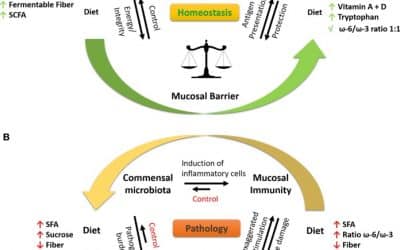
The Impact of Western Diet and Nutrients on the Microbiota and Immune Response at Mucosal Interfaces
Abstract Recent findings point toward diet having a major impact on human health. Diets can either affect the gut microbiota resulting in alterations in the host's physiological responses or by directly targeting the host response. The microbial...
Hyperbaric oxygen therapy of spinal cord injury.
Spinal cord injury (SCI) is a complex disease process that involves both primary and secondary mechanisms of injury and can leave patients with devastating functional impairment as well as psychological debilitation. While no curative treatment is available for spinal cord injury, current therapeutic approaches focus on reducing the secondary injury that follows SCI. Hyperbaric oxygen (HBO) therapy has shown promising neuroprotective effects in several experimental studies, but the limited number of clinical reports have shown mixed findings. This review will provide an overview of the potential mechanisms by which HBO therapy may exert neuroprotection, provide a summary of the clinical application of HBO therapy in patients with SCI, and discuss avenues for future studies.
Hyperbaric oxygenation alleviates chronic constriction injury (CCI)-induced neuropathic pain and inhibits GABAergic neuron apoptosis in the spinal cord.
Abstract: Dysfunction of GABAergic inhibitory controls contributes to the development of neuropathic pain. We examined our hypotheses that (1) chronic constriction injury (CCI)-induced neuropathic pain is associated with increased spinal GABAergic...
Normal carboxyhaemoglobin level in carbon monoxide poisoning treated with hyperbaric oxygen therapy.
Abstract: Throughout the world both intentional and inadvertent exposure to carbon monoxide (CO) remains an important public health issue. While CO poisoning can be lethal, the morbidity is predominantly due to nervous system injury. A previously...
NSL_ 32671: Retraction notice to Early hyperbaric oxygen therapy may improve the long term neurological consequences of diabetic patients suffering from hemorrhagic stroke [Neuroscience Letters 644 (2017) 83-86].
Abstract: Xu, Wei, Fan, Wang, Zhou, , , , (2017). NSL_ 32671: Retraction notice to Early hyperbaric oxygen therapy may improve the long term neurological consequences of diabetic patients suffering from hemorrhagic stroke [Neuroscience Letters 644...
Frequency and clinical impact of preoperative circulating tumor cells in resectable non-metastatic lung adenocarcinomas.
Abstract: Despite successful surgery, 30-50% of patients with resectable non-small cell lung cancer develop tumor recurrence within 5 years of surgery. In this prospective study, we performed CTC enumerations in 40 patients with non-metastatic lung...

10 Types of Dementia
Dementia is a term used to describe severe changes in the brain that cause memory loss. These changes also make it difficult for people to perform basic daily activities. In most people, dementia causes changes in behavior and personality. Dementia...
Toddler’s Brain Damage Reversed by Treatment After Near Drowning
USA Today Reports on the recovery of a 2-year-old Arkansas girl, Eden Carlson, who nearly drowned in her family's swimming pool. Her ordeal resulted in significant brain damage and her family was told that if she were to survive that...
Effects of hyperbaric oxygen therapy on depression and anxiety in the patients with incomplete spinal cord injury (a STROBE-compliant article).
Little research has been done on the effects of hyperbaric oxygen (HBO) on depression and anxiety after spinal cord injury (SCI). The aim of this study was to investigate the effects of HBO on psychological problems and never function, especially on depression and anxiety in the patients with incomplete SCI (ISCI).Sixty patients with ISCI combined with depression and anxiety were randomly divided into HBO group (20 cases), psychotherapy group (20 cases), and conventional rehabilitation control group (20 cases). All patients received routine rehabilitation therapy. However, in HBO group and psychotherapy group, patients also received HBO and psychotherapy, respectively. These therapies lasted for a total of 8 weeks (once a day and 6 days per week). Before and after 8 weeks of treatment, depression and anxiety, nerve function, and activities of daily living were, respectively, evaluated according to Hamilton Depression (HAMD) scale, Hamilton Anxiety (HAMA) scale, American Spinal Injury Association score, and functional independence measure score in all patients.After 8 weeks of treatment, HAMD score was significantly lower in both HBO group and psychotherapy group than in control group (all P < .05), but there was no statistical difference in HAMD score between HBO group and psychotherapy group (P > .05). HAMA score was significantly lower in HBO group than in control group (P < .05), but there was no statistical difference in HAMA score between HBO group and psychotherapy group, and between psychotherapy group and control group (all P > .05). After 8 weeks of treatment, American Spinal Injury Association and functional independence measure scores were significantly higher in HBO group than in both psychological and control groups, and also higher in psychotherapy group than in control group (all P < .05).The effects of HBO on depression and anxiety are similar to that of psychotherapy. HBO can significantly improve nerve function and activities of daily living in the patients with ISCI, which either psychotherapy or routine rehabilitation therapy can not substitute.